
The SDR-H2 is a Handheld MANET Mesh Transceiver in a rugged “Soldier Radio” form factor.
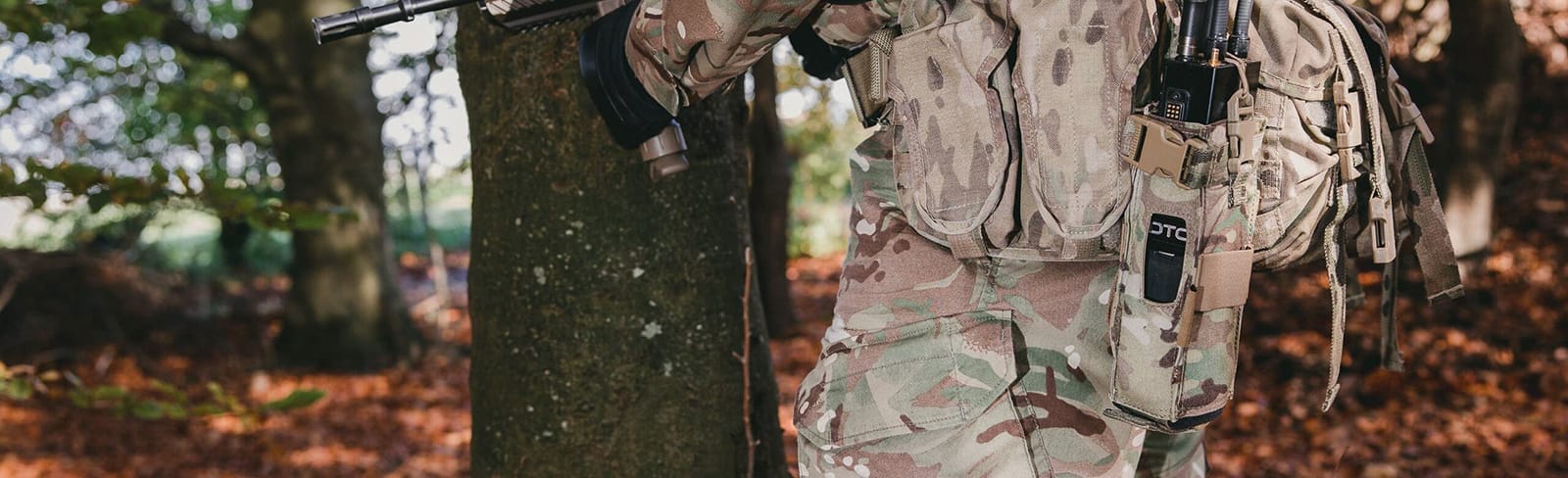
SDR-H2
Offering a full 2 watts of output power, employing standard MBITR batteries and compatible with an array of COTS/MOTS audio and visual accessories, the SDR-H2 is ideal for a variety of Tactical Mesh deployments.’ A lot of progress is being made on compatibility with existing audio accessories in various formats.
With a wide range of video, data and audio connectivity protocols and three dedicated input/output ports in different robust physical formats, the H2 offers maximum use-case versatility, equally employable as an airborne, UGV or infrastructure node as a handheld tactical radio.
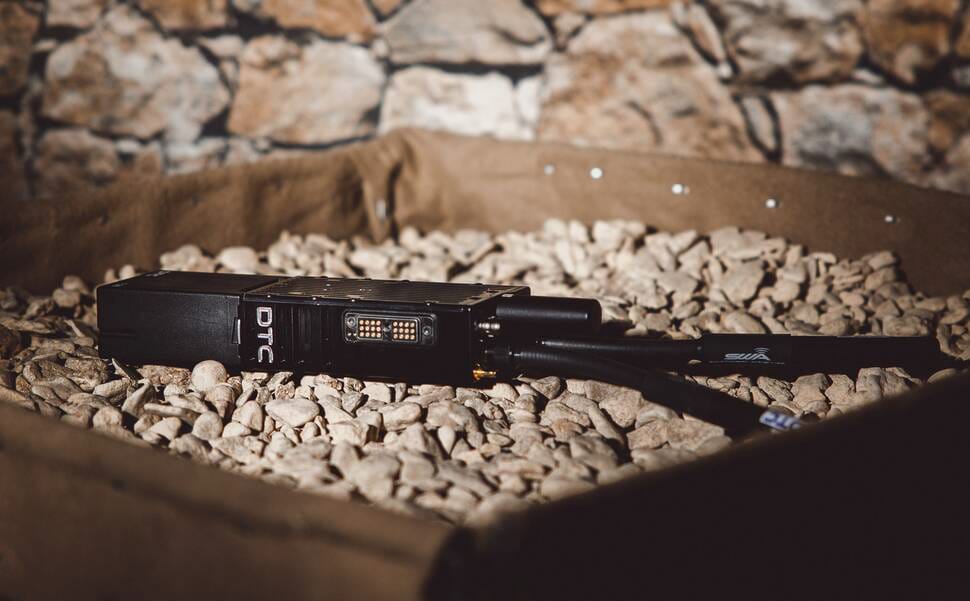
Multi Role
The SDR-H2 joins DTC’s versatile family of IP Mesh and P2P COFDM radios designed to meet the requirements of a diverse range of surveillance and battlefield applications. It combines a familiar “soldier radio” physical form factor, bulletproof construction and simplified user interface with the ability to use standard MBITR-style battery packs, chargers and holsters.
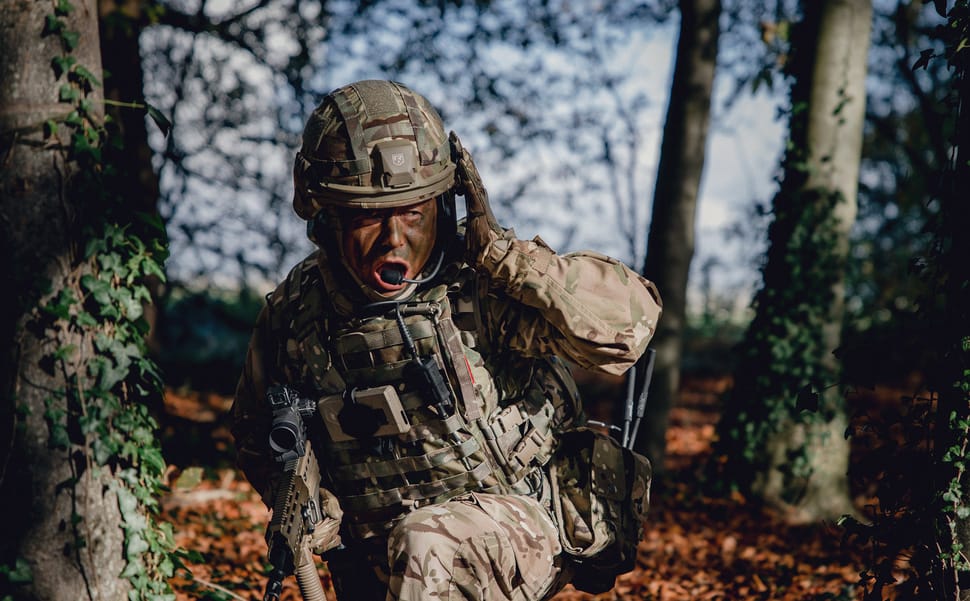
Refined Technology on the Battlefield
Frontline communications are fast, robust and automatically scaled with capability of up to 16 voice talk groups (all acting in full duplex VOX) in a meshed network whilst streaming IP, video and CoT (Cursor on Target) situational awareness data. Thus, offering compatibility with a range of BMS (Battle Management Systems).
The industry’s smartest mesh Waveform, MeshUltra-X™, over the air encryption and channel management, features such as DTC’s IAS (Interference Avoidance System) and performance in bandwidths all the way down to 1.25MHz guarantee no-loss communications in the most adverse conditions.
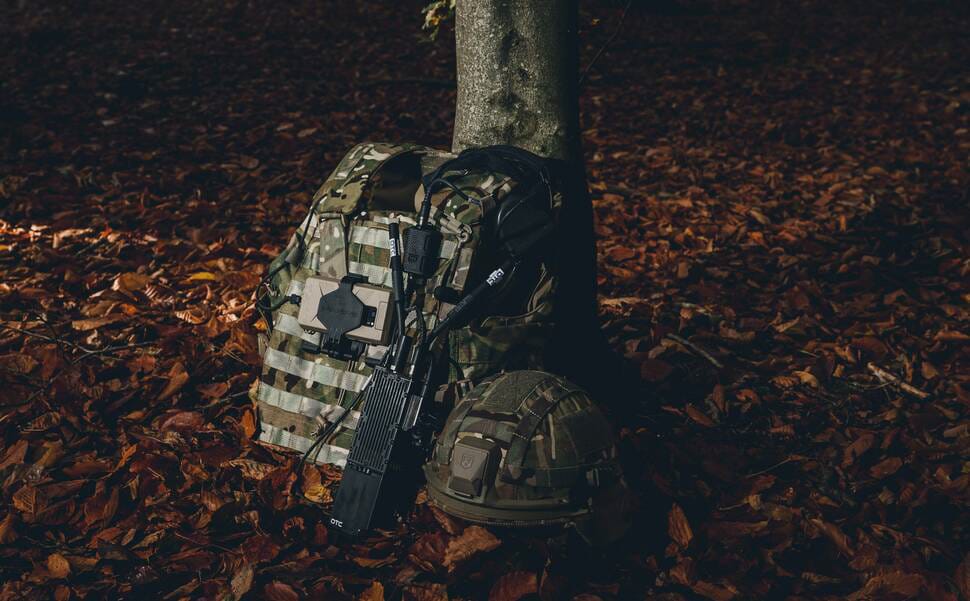
Off the shelf device compatibility
The SDR H2’s multiple connectivity ports and protocols make compatibility with an array of MOTS/COTS peripherals a reality.
Devices such as IP and USB cameras, power & data management hubs, rugged smartphones and even triggered sensors can be connected to the H2 with instant plug and play connectivity.
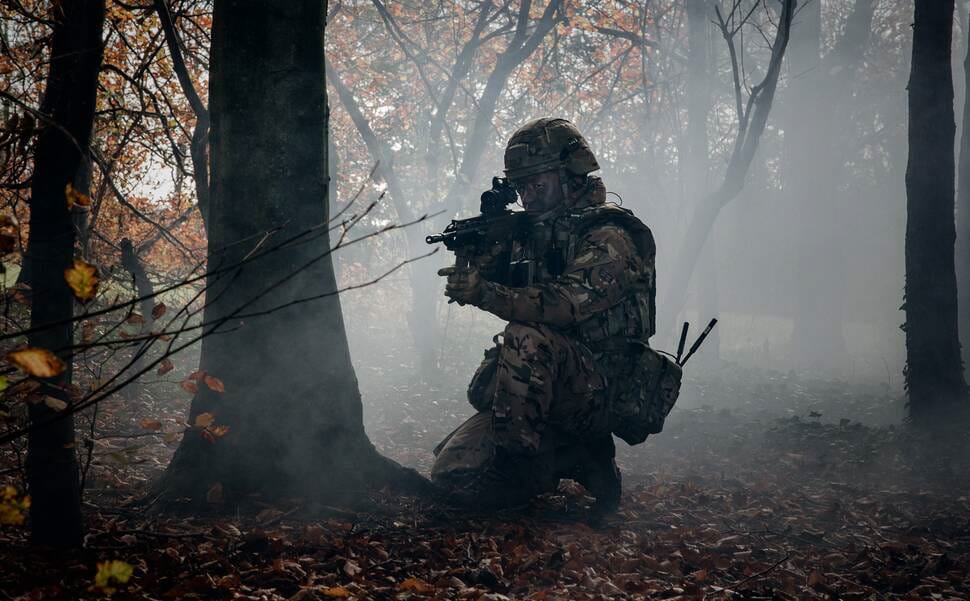
Real Time Video
The SDR-H2 offers dual on-board HD-capable video encoders and support for a variety of different camera interfaces including HDMI (with optional cable), an “open mic” full duplex audio channel, in-built GPS receiver and on board SD card storage as well as 2W of total output power.
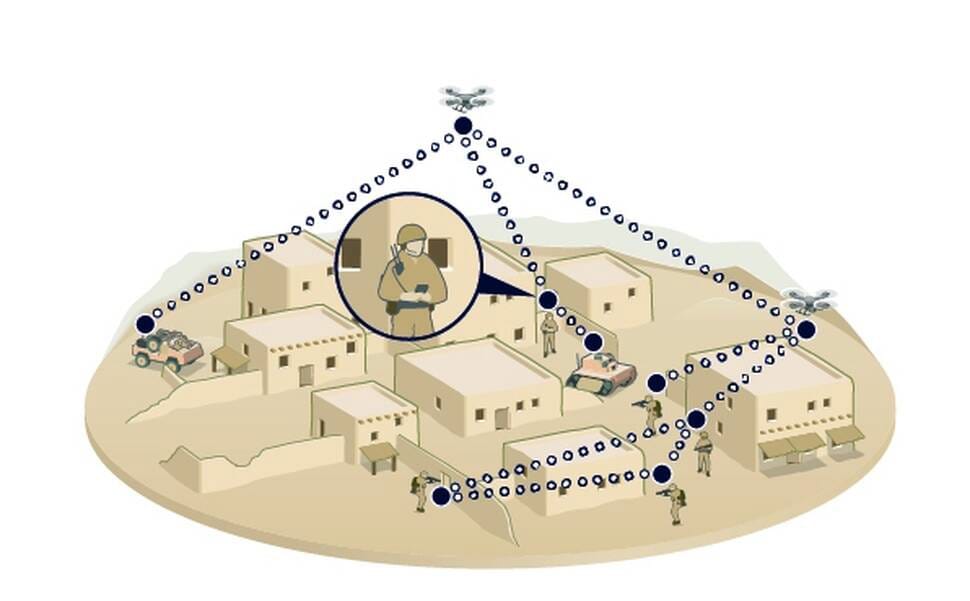
Cross Platform Connectivity
The SDR-H2 uses DTC’s proven and industry-leading SDR-C encased in a portable, rugged form factor. This single platform commonality hosting MeshUltra-X™ allows the ground-based end user to automatically mesh with manned and unmanned vehicles, UAVs, maritime assets and infrastructure nodes to create robust connectivity across the battlefield.
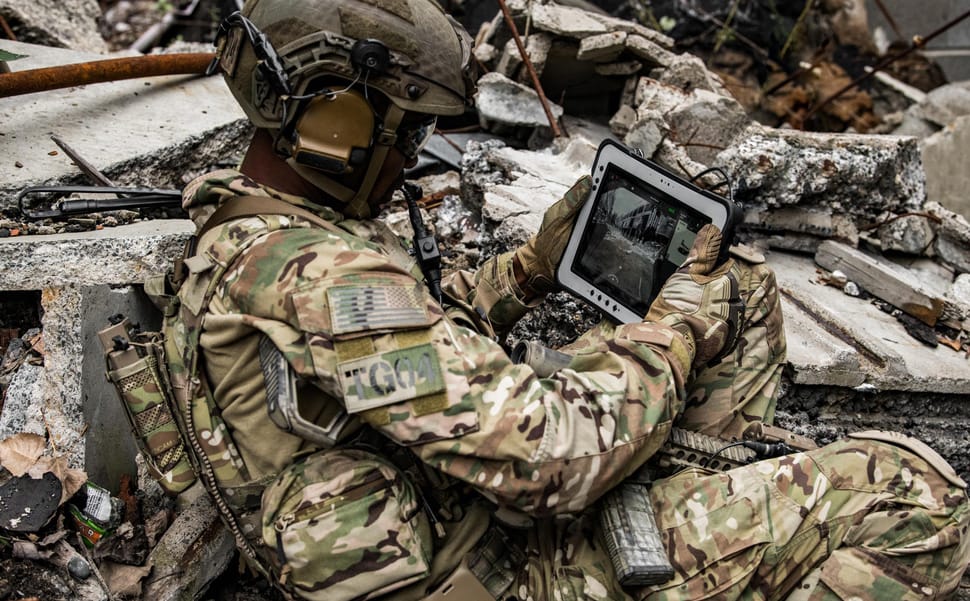
Fully Featured
Software defined audio, multiple hardware connection types, native dual-PTT sensing and a focus on usability makes the SDR-H2 compatible with a huge range of off-the-shelf military/tactical audio peripherals, giving the right solution for every end user. The SDR-H2 offers dual on-board HD-capable video encoders and support for a variety of different camera interfaces including HDMI (with optional cable), in-built GPS receiver and on-board SD card storage as well as 2W of total output power.
FAQ
Does Codan software run on Windows 64bit operating systems?
Yes. Codan software has been tested on Windows 7 to Windows 10 32bit and 64bit operating systems with no known issues.
What is the difference between an FED-STD and MIL-STD ALE?
FED-STD refers to the FED-STD-1045 ALE, whereas MIL-STD refers to the MIL-STD-181-141B ALE. FED-STD ALE has the basic ALE feature set for calling and messaging, whereas MIL-STD has additional features such as NET calling, selective call types and LQA exchange.
NET calling allows you to group your users into nets, so rather than calling a particular person or everyone, you can call a certain group identified by a net. With MIL-STD ALE, you also have a variety of selective call types – such as global all-call, selective all-call, global any-call, selective any-call, double any-calls and more. Advanced ALE, part of MIL-STD ALE, enables you to force an LQA exchange.
Do you have a mechanism in place to tell customers when a product is being discontinued? If so, how much longer will support be available?
Discontinued products will be announced on our website and customers will be informed of such discontinuance directly and via our quarterly newsletter. Codan will provide a support plan for discontinued products as part of the discontinuance announcement. Discontinued product announcements can be accessed via the dedicated area on the Codan Communications Support page.
Where can I find the user manual for my radio?
For Codan radios, user manuals are available for purchase along with additional copies. Please contact your dealer, distributor or local Support centre for purchase.
I need to return equipment for repair or assessment. What do I need to do in order to send the equipment back?
While Codan products are known for their extraordinarily high level of reliability, if you should encounter any problems, please contact Codan or visit our Support page.
Please email: lmrsupport@codancomms.com and include:
- Your name and contact number
- Return shipment address
- Model and serial number
- What the product issue is
To return LMR equipment to Codan Communications in Canada, the Codan service department must first issue an RMA (Return Materials Authorization) number to you. This RMA number needs to be written on the outside of the box when returned. For further instruction on RMA, visit our Technical Support webpage.
Can I readily get spare parts for Codan radios?
Codan maintains a spare parts catalogue for our HF and LMR radios. Please contact your dealer, distributor, or your local support centre for purchase.